

Most Common Causes of a Transmission Fluid Leak
Most Common Causes of a Transmission Fluid Leak
That reddish puddle under your car isn't something to ignore. A transmission fluid leak is one of the most common and serious vehicle problems a driver can face. The transmission transfers power from the engine to the wheels, and without enough fluid to keep it lubricated and cooled, it won't last long.
However, most leaks are fixable, especially when caught early. Let's explore how to spot a leak, what's likely causing it, and what to do next.
What Is Transmission Fluid and Why Does It Matter?
Transmission fluid is a specialized lubricant that keeps your transmission's moving parts running smoothly. It reduces friction, prevents overheating, and helps your vehicle shift gears reliably. Without it, the internal components grind against each other and wear out fast.
Automatic transmission fluid is typically bright red or light pink when fresh, making it easy to identify compared to other fluids such as engine oil or coolant. Over time, it darkens to a reddish-brown. Manual transmissions use a different type of fluid that may appear amber or clear.
Fluid levels should remain consistent between changes. A noticeable drop in level almost always points to a leak somewhere in the system.
How to Tell if Your Car Is Leaking Transmission Fluid
Recognizing the signs of a transmission fluid leak early can save you from a much larger repair bill down the road. Here's what to look for:
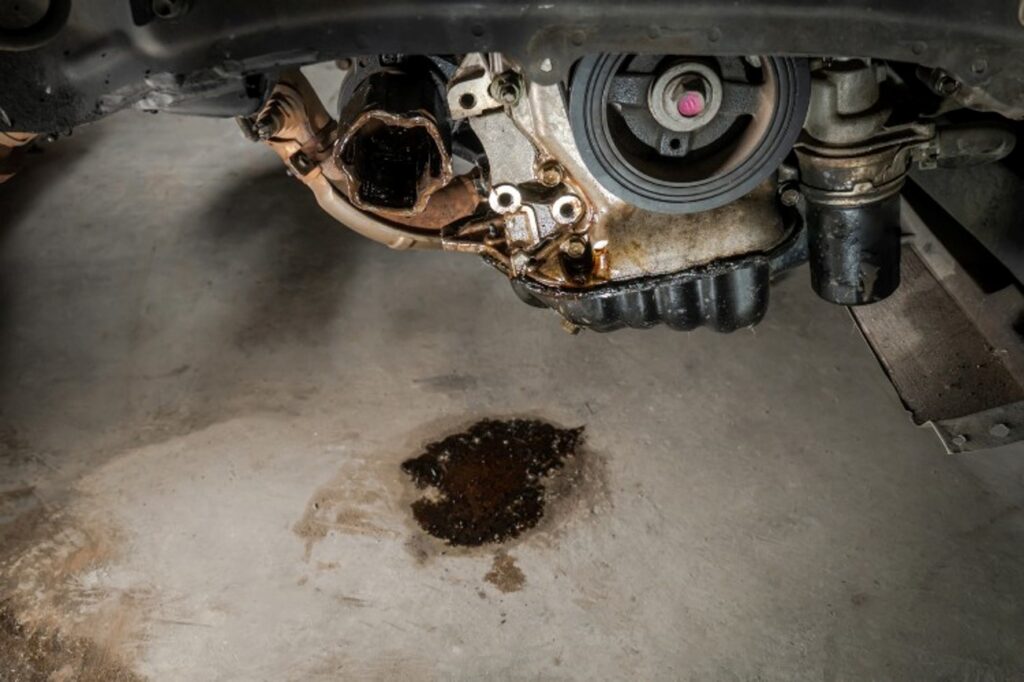
- Fluid Under the Car – A thin, red or reddish-brown puddle beneath your parked vehicle (usually near the center or front) is the clearest indicator of a car leaking transmission fluid.
- Delayed or Rough Shifting – Low fluid levels reduce the hydraulic pressure needed to shift gears smoothly. You may notice hesitation, jerking, or slipping between gears.
- Burning Smell – Transmission fluid that makes contact with hot engine components burns off quickly, producing a distinct chemical odor.
- Sweet or Tart Smell – Fresh transmission fluid has a slightly sweet smell. If you notice this near your vehicle, there's likely a leak.
- Overheating Transmission – Without adequate fluid, the transmission runs hot, which can trigger warning lights or cause erratic performance.
Most Common Causes of a Transmission Fluid Leak
Several components can fail and cause a transmission to leak fluid. These are the most likely culprits:
- Damaged Transmission Pan or Pan Gasket – The transmission pan sits at the bottom of the transmission and holds the fluid. A gasket seals the connection between the pan and the transmission housing. Over time, that gasket wears out, hardens, or gets damaged. A bent pan can also break the seal. The drain plug at the bottom of the pan is another common source. If it's loose or its seal has worn out, fluid will drip steadily from underneath the vehicle.
- Worn or Damaged Seals – Transmissions rely on multiple seals throughout the system around the output shaft, front pump, valve body, driveshaft, and sensors. Any one of these seals can crack, harden, or loosen with age, heat cycles, and regular wear. A worn seal might cause anything from a minor drip to a significant automatic transmission fluid leak, depending on its location and severity.
- Cracked or Damaged Transmission Fluid Lines – Fluid lines carry transmission fluid between the transmission and the cooler. These lines are typically made of high-grade steel or aluminum, but they're still vulnerable to corrosion, physical damage, and degradation over time. A hairline crack or a loose connection point at either end of the line is enough to cause a steady leak.
- Failing Torque Converter – In an automatic transmission, the torque converter transfers power from the engine to the transmission and manages fluid flow through the system. Because it holds a significant volume of fluid at any given time, even a small crack or a worn front pump seal can result in a noticeable automatic transmission fluid leak. Left unaddressed, a failing torque converter can lead to broader internal transmission damage and potentially require a full rebuild.
- Cracked Transmission Housing – This is the worst-case scenario. The transmission housing encases the entire transmission system, and if it develops a crack, fluid leaks directly out of it. Cracks in the housing often result from severe impact, extreme heat, or significant mechanical stress. A cracked housing is relatively rare compared to the other causes above, but when it does happen, a full transmission replacement is often the only viable solution.
What Happens if You Ignore a Transmission Fluid Leak?
Ignoring a transmission fluid leak is a costly mistake. Here's how the situation typically escalates:
- Low fluid levels reduce lubrication and cooling throughout the transmission.
- Increased friction and heat cause internal components to wear prematurely.
- Gear slipping, rough shifting, and delayed engagement become more frequent and severe.
- Complete transmission failure occurs, requiring a rebuild or full replacement.
How to Fix a Transmission Fluid Leak
Transmission fluid leak repair depends entirely on the source and severity of the leak. Here's a general breakdown:
- Pan Gasket or Drain Plug – Replace the gasket or reseal the pan. This is one of the simpler and more affordable fixes.
- Worn Seals – A mechanic will identify the failing seal and replace it. Labor costs vary based on which seal is affected and how accessible it is.
- Cracked Fluid Lines – Lines can usually be repaired or replaced without disturbing the rest of the transmission system.
- Torque Converter – Fixing a torque converter requires disassembly of the transmission. This is a more involved repair that should only be handled by a transmission specialist.
- Cracked Housing – In most cases, a cracked housing means replacing the entire transmission.
Tips to Prevent Transmission Fluid Leaks
Routine maintenance goes a long way in preventing leaks before they start. Here are a few tips to help prevent transmission fluid leaks:
- Change Transmission Fluid on Schedule – For automatic transmissions, this is typically every 60,000 to 100,000 miles. Manual transmissions generally require a change every 30,000 to 60,000 miles. Dirty fluid causes clogs and cracks in lines over time.
- Inspect the Fluid Regularly – Wipe the dipstick on a clean paper towel. Healthy ATF is pink or bright red. Dark, brown, or burnt-smelling fluid needs attention.
- Have the Transmission Inspected Periodically – A mechanic can spot early signs of wear on seals, gaskets, and fluid lines before they fail completely.
- Avoid Overloading or Overheating Your Transmission – Excessive towing, stop-and-go driving in extreme heat, and spirited driving all add stress to the system.
When to Visit a Transmission Specialist
Some fluid leaks are straightforward DIY repairs, such as tightening a loose drain plug. Most, however, require lifting the vehicle, identifying the exact source of the leak, and replacing specific components. That's a job for a professional. Visit a transmission specialist if:
- You’ve found fluid under your car and aren’t sure of the source
- Your vehicle is experiencing shifting problems alongside the leak
- The transmission dipstick shows significantly low fluid
- You smell burning fluid while the car is running
- Any warning lights related to the transmission have come on
Don’t Let a Small Leak Become a Big Problem
What starts as a minor transmission fluid leak can quickly escalate into a major mechanical failure if left alone. The good news is that most leaks are repairable when caught early, and the cost of repair is almost always far less than the cost of a full transmission replacement.
Keep an eye out for the signs of a transmission fluid leak, stay on top of your fluid changes, and don't delay getting your vehicle inspected in Fort Lauderdale, FL if something seems off. Contact Gold Coast Transmissions today for more information on how we can help keep your transmission running smoothly.
Need HVAC Service?
Contact the experts at Midwest Heating & Cooling. Same-day availability and 24/7 support.
Call us at 414-209-4668!